To read this blog in chronological order please scroll down to the blog titled, “Back in Tanzania, December 2013″, and read up from there. It is down quite a few entries.
Everything below that is from our 2011 Tanzania trip.
To read this blog in chronological order please scroll down to the blog titled, “Back in Tanzania, December 2013″, and read up from there. It is down quite a few entries.
Everything below that is from our 2011 Tanzania trip.
I have added photos of the fete in honor of Chris for his role in the past year of service with installing computers and teacher training in 1200 elementary schools. Click here to go back to the entry about the fete plus a link to the photos.
Hi all, We are home, and we are all sick. I have my sinus infection and ear infection, Lynn’s got quite a cold, and Chris has a cold. I suspect I was the source of it all because I came down with a cold first. The trip home took forever, over 40 hours of travel time with over 24 hours in the air. I was pretty tired of sitting in a plane seat!
All’s good at home. Our first comment in the house was that it’s so quiet here. Much more so than the planes of course, but also quieter than the apartment in Dar which was surrounded by people and traffic noise. Those jalousie windows don’t keep out much noise.
It feels so cold here after being in 90 plus degree weather for two weeks! But we’ll adjust. We are looking forward to getting ready for Christmas, so soon to buy a Christmas tree.
I will post many photos now. Hope you enjoy them! Click on each one to make it large:

With the vet getting the export permit for the kitty.

In Tandehimba. One can see a pipe coming from the house roof to the cistern to add to the water supply.

These trees grow in Hawaii too but I don’t recall the name.

We didn’t know him but he sure wanted his photo taken with us.

Little stores like this are found in the villages

Cooking spaghetti sauce on Chris’ kerosene stove. These and charcoal stoves that sit on the floor are the typical cooking tool.

Chris and Lou at Slipway.

Slipway Mall in Dar es Salaam.

Sign advertising Serengeti Beer. This is sold all over Tanzania.

All of us at this table except Lynn are newly Returned Peace Corps Volunteers. Okay, I became an RPCV 46 years ago…

Pools tables in open sheds are common in villages.

Having a nice meal with a PCV and some RPCVs at the Waterfront Restaurant at the Slipway Mall.

On the beach at low tide in Dar es Salaam.

Relaxing at Slipway in Dar.

Mangroves in the Indian Ocean.

Mama Vi and Lynn with a beautiful piece of cloth given by Mama Vi. Vi had the prettiest smile.

Canoe and a lady washing clothes on the beach in Dar.

People chatting.

Our apartment in Dar. It was a nice place to stay.

In Chris’ Tandehimba house. All buildings have steel bars to keep residents safe. Some have bars in pretty patterns.

Some of Chris’ little friends visiting in Tandahimba.

A restaurant in the village of Tandahimba. I don’t know what they were cooking.

Up close this lady looked to be in her late 70s!
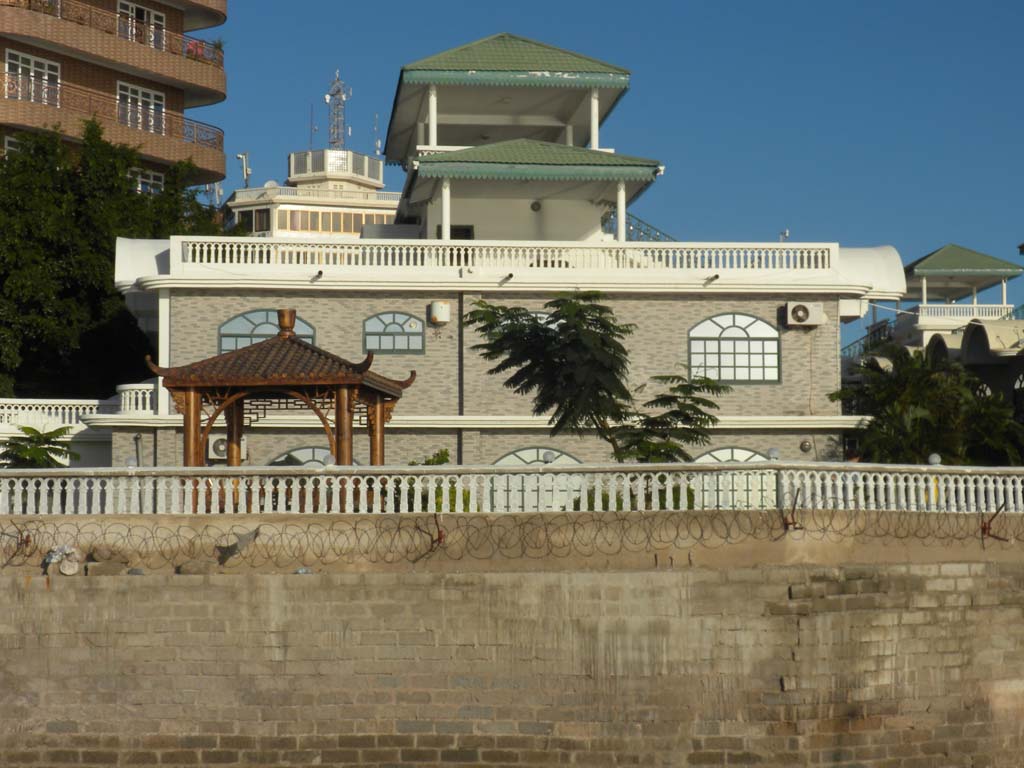
In the resort area of Dar es Salaam.

Waterfront restaurant in Slipway Shopping Center, Dar es Salaam.

Beautiful material.

This very nice lady whose restaurant we ate at gave us bracelets.

In Tandahimba we went here for chai (tea and chapatis) each morning
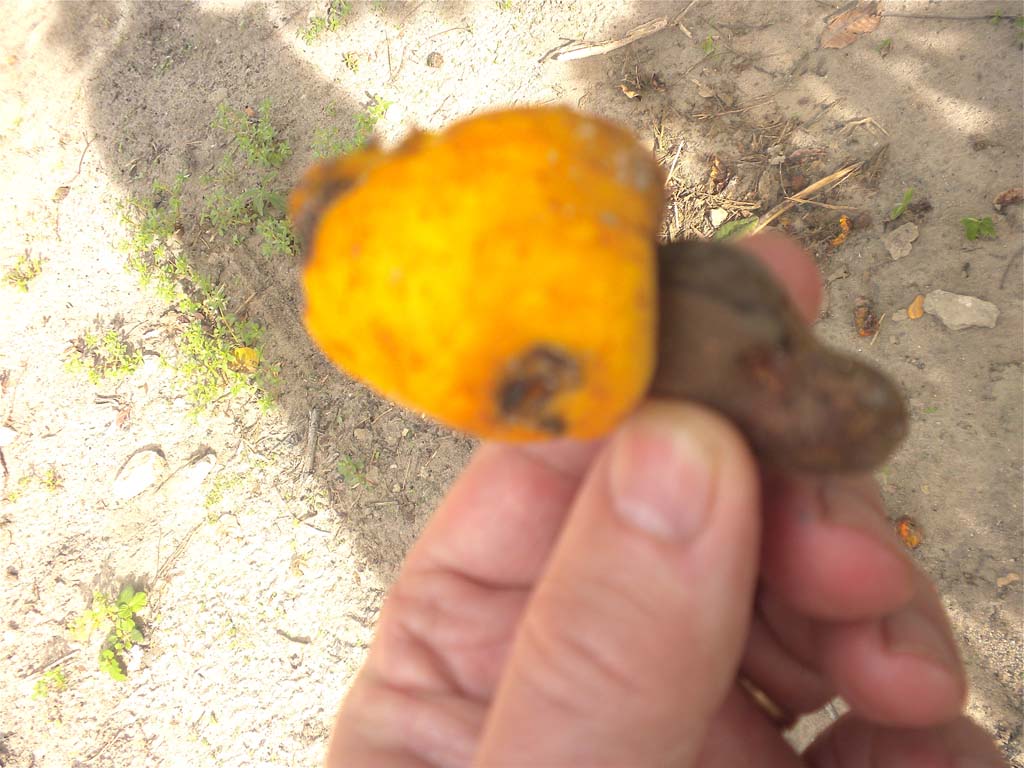
Here’s what cashews look like fresh off the tree.

Canoes moored in the shallow waters in Dar.

Another store in Tandahimba.

Lynn’s favorite place in Slipway Shopping Center

25 gallons of water being conveyed on a bike. Bikes are used for all kinds of material moving. I saw people with six pieces of 2×10″ 8′ long riding down the road.

These are so great for local transportation! It’s a nice, cool ride on these.


You know you’re in East Africa when even the life vest signs are in Kiswahili!


This was a surprise and the burritos were good!
We have completed the ten hour overnight flight from Dar es Salaam to Zurich after starting to the Dar airport 5 1/2 hours before flight time because of the heavy traffic. So we have a good start on our 40 hour journey home 🙂 We are in the Zurich Airport and have free wifi!
I’m going to upload six pics from my iPad now and will upload more after getting home. They are:
1. Another local meal in Tandahimba complete with a smoked fish head as part of the meal 😉
2. Maasai in Dar. I was surprised – one usually sees them in the north.
3. Apple cart.
4. Dar traffic – lane, what lane??
5. Mexican Restaurant. We had very good burritos here, and then took a bajaji back to our apartment because it was after dark and it’s best not to walk for safety reasons. In fact, if we had gone more than a quarter mile a locked taxi would have been better.
6. Slipway Shopping Mall.


Monday, our last day in Tanzania. At 5 PM a taxi driver will pick us up at our apartment and bring us to the airport. Then at 10:10 PM we fly to Zurich as the first leg of our flight. The kitty’s paperwork is all ready, the soft-sided carrier is marked with his information, and he will join us in the cabin for the flights.
It’s been an amazing time here. We’ve met so many wonderful people, done so many interesting things had some great food, seen some great scenery, and I gained a nice suntan. Our two weeks here provided an ample amount of time to experience things and we now look forward to returning to Portland (where I will promptly lose my suntan) and will get ready to celebrate Christmas.
We had a delightful evening with three Peace Corps Volunteers. I treated them to dinner at a restaurant on the beachfront. Afterwards they came over to our apartment. They’d been having trouble conceptualizing my PC experiences from 1965 to 1967, so I showed them my photos and descriptions (paffl.net/Liberia1/index.htm) and they were amazed at the consistency between my experiences and their experiences. The photos brought 1960’s Peace Corps experiences to them, and they found them to be much the same, even to one of the volunteers exclaiming this hut could be mine and the one next to it could be my neighbor’s.
Chris had a ball at the wedding party – lots of good food, dancing, etc. It went until midnight. Oftentimes the ceremony takes place with just a few people present followed by the much larger post-wedding party.
I slept on 3 pillows last night to keep my head up for better breathing, and today am feeling a lot better than yesterday, thank goodness.
It’s another beautiful sunshiny day here. We’ve had very little rain on this trip even though it is the rainy season. That’s good for us but I’m feeling sorry for the farmers who depend so much on the rains. Some people are getting tight for drinking water too. Most of the homes away from the cities depend on a water collection system from the roofs into cisterns. One sees makeshift gutters with creative piping from gutters to the cisterns, oftentimes with forked thin tree branches supporting the pipes. In Tandahimba I saw one system where two roof gutters fed one cistern pipe by having pipes from both slopes enter a large plastic jug and one pipe exiting the jug going to the cistern. It’s really great to see all the creativity!
Some great news – Chris succeeded in getting the export permit for the cat. He applied on Wednesday and didn’t get the permit until today. Since we leave on Monday we were getting nervous.
Not great news – I’ve come down with a full-fledged sinus infection and started Augmentin this morning. I’d been trying to wash it out using a neti pot but this time didn’t succeed. Advil is helping with the symptoms but I’ll be doing the full course of antibiotics.
Wedding – Chris will go to a wedding tonight of one of the Peace Corps leaders. I don’t feel good enough to go.
Drinking water – The water that comes out of the faucet here is never safe to drink. We must boil it for at least 3 minutes and let it cool. A nice addition is to run the boiled water through a cone filter to remove the sediment. We don’t have a filter so part of the time we drink the water which is kind of tannish. We also buy bottled water: individual 500 ml size (pint), 1.5 liter size, and a relatively enormous 9 liter size. There are bigger bottles but since we must carry it back from the store to our apartment we’ve been using teh 9 liter bottles. In this area the brand is Kilimanjaro and it has a nice bluish sky photo of Mt. Kilimanjaro on it.
Hi all,
I have many photos that I’d like to upload to this blog but at the moment I can’t with the equipment I’m using. So they will have to wait until next Wednesday when we are back home. I hope you enjoy them when I do post them – there will be some interesting ones…
Today has been a laid back day for Lynn and me. We went over to the Slipway Shopping Center and bought a few groceries. Chris had some running around to do, and in fact is now off to the vet’s office to get the final export permit for Brown Eyes, his beautiful black cat.
This evening we met for dinner with 3 other new RPCVs. They wanted to eat at a nice place and we found a very nice Chinese/Thai/Indian restaurant. We had a ball talking late into the evening and celebrated that 5 of the 6 of us are now officially Returned Peace Corps Volunteers (Lynn was never in the Peace Corps). Of course I became a RPCV 46 years ago. They were interested in my experiences and we found that mine related similarly to theirs.
Apartment here in Dar:
It’s a nice enough two bedroom place, electricity that has stayed on the whole time we’ve been here, big square tiles for the floors which is typical, jealousy windows, steel bars over all the windows to prevent break-ins, sofa, easy chairs, table and chairs for dining, comfortable beds with mosquito nets hanging above them and some storage space, a kitchenette in the living room with a propane stove, sink, counter, eating bar, refrigerator which freezes in the freezer but doesn’t cool in the main compartment, shower where the shower rod is so high that the shower curtain doesn’t come down to the bottom of the shower pan, leading to lots of water on the floor after showering, modern flush toilet, hot and cold water and, very nice, we have daily maid service.
We also have our own yard with nice tropical plantings and a security fence by the street with a security guard who is sometimes around. There is a table and three chairs on the patio outside.This is definitely NOT living local, but it’s nice for a change.
The sidewalk along the road is made of bricks and while the majority are nice and flat, in some places it’s a mess. The road itself is asphalt, and it gets quite a lot of traffic. Immediately across the street is a bajaji stand so we never have to search or walk for public transportation. At the corner to our left is a Doubletree Inn, and to the right about 250 yards is the Slipway Hotel and shopping center.
Slipway Shopping Center from Here:
The shopping center http://www.youtube.com/watch?v=7wpcOm0UV0A is tiny by American standards but has a very nice variety of small shops, most of which cater to the tourists. Many commercial African art items are available for purchase. There is the excellent waterfront restaurant, and there is a small open-air restaurant in the main open area. We often go to Shrijee’s Super Market which has a surprisingly nice variety of foods and other supplies, and a fabulous wine selection. Again, it caters to the tourists.
Chris:
This is Chris’ last hour as a Peace Corps Volunteer. He’s on his way to the Peace Corps office to be officially finished as a volunteer. When he comes back to the apartment he will be an RPCV, Returned Peace Corps Volunteer, just like me. What a life-changing experience this has been for him.
Lynn:
Lynn is about to go to lunch with three other third year PCVs who are also finishing their time here. We met one of them, Carolyn, two years ago when we visited Chris. She took Lynn shopping then and was so good with her, being used to helping an aunt with walking problems. Lynn is really looking forward to seeing Carolyn and meeting the two other volunteers.
Lou:
I am doing well and have acquired a fine tan in this very intense sun (we are about 7 degrees south of the equator). I’ve been enjoying the exotic lifestyle here thoroughly: people beautifully dressed in African clothes, head loading everything imaginable, everyone on the street being friendly with their faces lighting up as soon as one waves at them or gives a verbal greeting, the chance to eat native food in many tiny makeshift restaurants, the totally crazy driving style here which gives one a rush while riding in a vehicle, be it taxi, bus, or bajaji (sorta like a bumper car ride except the cars rarely actually bump even though they may stop six inches from bumping). I’m thrilled to be back in tropical Africa for a bit and shall miss it when I leave.
Today Chris and I went to a vet’s office. He’d been calling the vet but got no answer. He knew the vet’s office name and had talked to the vet a few weeks ago, but now that he wanted to bring his cat in for an exam to get the paperwork to bring the cat back to Oregon the vet hasn’t answered the phone for two days.
So we decided to go to the office. First problem, no address. The solution was to use Google Maps to get an approximate location. Then we hopped in a bajaji and got to the neighborhood shown on Google Maps. We walked for about a half mile on the correct street looking for the vet’s office to no avail. We stopped at a doctor’s office and asked if they knew where the vet’s office is. We were told it’s in the strong building (meaning tall building) about 10 buildings down. We walked to it, no sign. So we went in the entrance and there was still no sign, but someone sitting inside pointed the way to the correct part of the building. We made an appointment to come back in an hour with the cat. Bajaji ride home, then a bajaji ride back with the cat, and an hour and a quarter later the applications for an exit visa for the cat were complete. The vet’s price including 3 shots was 51,000 shillings, about $31, not bad! Then it was a bajaji ride back home. Hopefully the exit visa will be ready Friday.
The traffic to and from the office was totally crazy. You can’t imagine how they drive here. Traffic lanes are largely ignored, and even staying on the correct side of the road is often ignored. There are more near misses here than anywhere else I’ve been. As the Peace Corps trainers told Chris’ group of trainees when they came here, “The most dangerous thing you’ll encounter in Tanzania is riding in vehicles.” How true that is!
We spotted a Mexican restaurant about 1/3 mile from our apartment and went there for dinner. The burritos were surprisingly good! Who would have guessed such a place way out here?
 paffl
paffl 